The Importance of Communion Prayer in Strengthening Your Faith

Communion prayer is more than just a ritual; it’s a way to connect with God and strengthen your faith. When we take the time to pray during communion, we are reminded of the sacrifice Jesus made for us and the love He has for each of us. This practice can deepen our relationship with God, help us find peace in tough times, and bring us closer to our community. In this article, we’ll explore what communion prayer is, its benefits, and how to incorporate it into our daily lives.
Key Takeaways
- Communion prayer helps us connect deeply with God and understand His love.
- It strengthens our bonds with fellow believers, creating a supportive community.
- Taking time for personal reflection during communion can clarify our thoughts and feelings.
- Incorporating prayer into our daily routines can enhance our overall faith journey.
- Sharing experiences within a community can inspire and uplift others in their faith.
Understanding Communion Prayer

Definition and Significance
Okay, so what is communion prayer, really? It’s more than just saying grace before a meal, that’s for sure. It’s a special kind of prayer that connects us to the sacrifice of Jesus Christ and to each other. It’s about remembering what Jesus did for us and recognizing His presence in our lives. It’s a time to reflect, give thanks, and ask for guidance. It’s a big deal in many Christian traditions, and it’s meant to be a deeply meaningful experience. It’s a time to reflect on the Eucharist and its significance.
Biblical Foundations
Where does this whole communion thing even come from? Well, it’s rooted in the Last Supper, that final meal Jesus shared with his disciples before his crucifixion. The Bible talks about it in a few places, like in the Gospels (Matthew, Mark, Luke, and John) and in Paul’s letters. These passages describe how Jesus took bread and wine, blessed them, and shared them with his followers, telling them to do this in remembrance of him. It’s all about remembering Jesus’ sacrifice and celebrating our connection to him. You can read more about the words of consecration in the Bible.
The Role of Communion in Worship
Communion isn’t just a private thing; it’s a central part of worship in many churches. It’s a time when the community comes together to remember Jesus, to confess their sins, and to receive God’s grace. It’s a way to participate in the life of Christ and to strengthen our bonds with other believers. It’s often accompanied by hymns, prayers, and readings from the Bible. It’s a powerful reminder of God’s love and our commitment to follow him. It’s a time to reflect on how Christ is present in our lives.
Heavenly Father,
We thank you for the gift of communion, a sacred meal that reminds us of your Son’s sacrifice. Help us to approach this time with reverence and gratitude, opening our hearts to your presence. May we be strengthened in our faith and united in your love as we partake in this holy sacrament. Guide us to live lives worthy of the grace we receive. We ask all this in Jesus’ name.
Amen.
Here are some ways communion strengthens worship:
- It reminds us of Jesus’ sacrifice.
- It unites us with other believers.
- It allows us to experience God’s grace.
The Spiritual Benefits of Communion Prayer

Deepening Your Relationship with God
Communion prayer isn’t just going through the motions; it’s about really connecting with God on a deeper level. It’s like having a heart-to-heart conversation where you’re truly listening and opening yourself up to His presence. This practice can transform your understanding of God’s love and grace. It’s not always easy, and sometimes it feels like you’re just talking to yourself, but the more you do it, the more you’ll sense His presence in your life. It’s about building a relationship, just like any other relationship, through consistent communication and shared moments. You can find peace and purpose through daily devotions.
Heavenly Father,
Thank you for the opportunity to connect with you through communion prayer. Help me to open my heart and mind to your presence, so that I may deepen my relationship with you. Guide me to listen to your voice and to understand your love and grace. I ask for your guidance and wisdom as I seek to grow closer to you.
Amen.
Enhancing Community Bonds
Communion prayer isn’t just a solo activity; it can also bring people together. When you pray with others, you’re sharing your faith and vulnerabilities, which can create a powerful sense of community. It’s like building a bridge between hearts, where everyone feels supported and understood. Shared prayer can strengthen church fellowship. It’s about realizing that you’re not alone in your journey and that others are there to lift you up and encourage you. It’s a reminder that we’re all part of something bigger than ourselves. Sharing prayers can enhance daily peace.
Fostering Personal Reflection
Communion prayer provides a space for personal reflection. It’s a time to slow down, quiet your mind, and really think about your life, your actions, and your relationship with God. It’s like holding up a mirror to your soul and asking yourself the tough questions. It’s not always comfortable, but it’s necessary for growth. It’s about identifying areas where you need to improve and seeking God’s guidance to become a better version of yourself. It’s a chance to examine your intentions and align them with God’s will. The Bible marriage blessing emphasizes spiritual unity.
Communion prayer is a powerful tool for spiritual growth. It allows us to connect with God on a deeper level, strengthen our relationships with others, and reflect on our own lives. It’s a practice that can bring peace, joy, and purpose to our lives.
Incorporating Communion Prayer into Daily Life
Setting Aside Time for Prayer
Okay, so fitting communion prayer into your daily routine might seem like another thing on your already massive to-do list. But think of it less like a chore and more like a mini-retreat. Even just five minutes can make a difference. I find that first thing in the morning, before the chaos of the day hits, or right before bed, after everything has calmed down, works best. Experiment and see what fits your schedule.
- Set a daily reminder on your phone.
- Pair it with an existing habit, like your morning coffee.
- Keep a prayer journal handy.
Heavenly Father,
Help us to prioritize our time with You each day. Guide us to find moments of stillness amidst the busyness of life, so that we may draw closer to You in prayer and communion. Fill us with Your peace and presence as we seek Your face.
Amen.
Creating a Sacred Space
You don’t need a fancy chapel to have a meaningful prayer time. Your sacred space can be anywhere you feel comfortable and can focus. It could be a corner of your bedroom, a spot in your garden, or even your favorite armchair. The key is to make it a place where you can disconnect from distractions and connect with God. I like to light a candle or put on some quiet music to help set the mood. It’s all about creating an atmosphere that encourages reflection and openness.
Creating a sacred space is about more than just the physical location; it’s about cultivating an inner environment of peace and receptivity. It’s a place where you can be honest with yourself and with God, free from judgment and expectation.
Using Scripture in Communion Prayer
Incorporating scripture into your communion prayer can really deepen your experience. Read a passage, reflect on its meaning, and then use it as a springboard for your prayer. What does the passage say about God’s character? How does it apply to your life right now? Let the words of scripture guide your thoughts and shape your prayers. I find that reading the Psalms is a great way to start. They’re full of emotion and honesty, and they really help me to express my own feelings to God. Consider using daily prayer to enhance your experience.
Heavenly Father,
We thank You for the gift of Your Word, which illuminates our path and guides us in truth. Help us to meditate on Your scriptures and apply them to our lives, that we may grow in wisdom and understanding. May Your Word be a lamp unto our feet and a light unto our path.
Amen.
Communion Prayer and Overcoming Challenges

Finding Strength in Difficult Times
Life throws curveballs, doesn’t it? It’s during those tough times that communion prayer can be a real lifeline. It’s not about magically making problems disappear, but about finding the strength to face them head-on. When you feel like you’re drowning, turning to God in prayer can give you the courage and perspective you need to keep going. It’s like having a constant source of support that you can tap into anytime, anywhere. I know it sounds simple, but it really can make a difference.
Heavenly Father,
We come before you in times of trouble, seeking your strength and guidance. When we feel overwhelmed by the challenges of life, remind us of your unwavering presence and love. Help us to find solace in your word and to trust in your plan for us. Grant us the courage to face each day with hope and faith.
Amen.
Trusting God’s Plan Through Prayer
It’s easy to question everything when things go wrong. We wonder why certain things happen, and it’s hard to see the bigger picture. That’s where prayer comes in. It’s about trusting that even when we don’t understand, God has a plan. It’s not always easy to accept, but prayer can help us find peace and acceptance. It’s about surrendering our worries and trusting in something bigger than ourselves.
Sometimes, it feels like we’re wandering in the dark, but prayer reminds us that we’re not alone. It’s a way to connect with God and find comfort in his presence. It’s about letting go of our need to control everything and trusting that God will guide us through.
Stories of Faith and Resilience
Hearing how others have overcome challenges through faith can be incredibly inspiring. It reminds us that we’re not alone in our struggles and that it’s possible to get through even the toughest times. Here are a few examples:
- Sarah, who battled a serious illness and found strength in daily prayer.
- Mark, who lost his job and relied on his faith community for support.
- Emily, who faced a difficult family situation and found peace through prayer and reflection.
These stories show the power of faith and resilience in the face of adversity. They remind us that even when things seem impossible, prayer serves as a vital source of strength and hope. It’s about finding the courage to keep going, even when we don’t know what the future holds. It’s about trusting that God will be there to guide us every step of the way. Remember that midweek prayers and blessings can uplift your spirit. As we approach the new year, let’s embrace hope and renewal through prayer.
The Impact of Communion Prayer on Faith Growth
Building a Stronger Faith Foundation
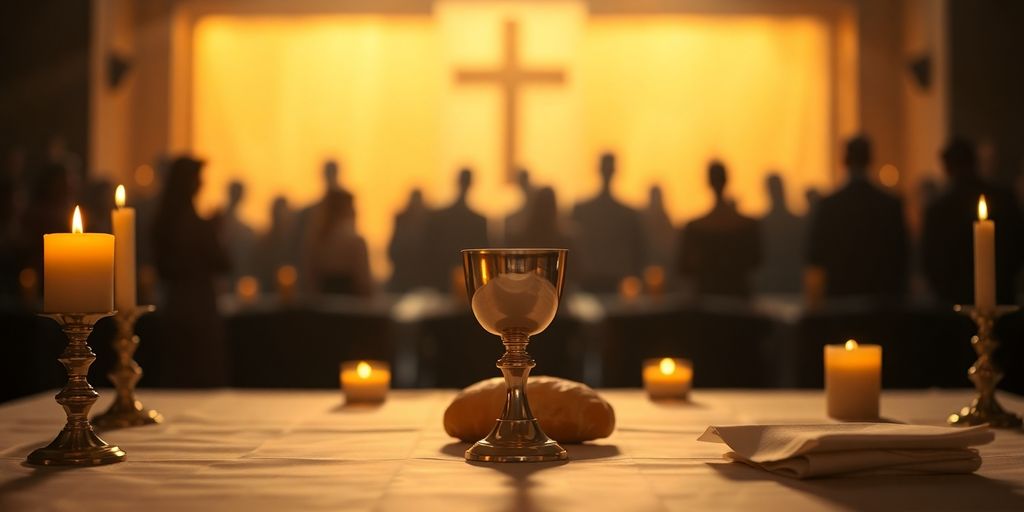
Communion prayer, when practiced regularly, can really help solidify your faith. It’s like building a house – you need a solid foundation. Communion prayer provides that foundation by constantly reminding you of God’s presence and promises. It’s not just about saying words; it’s about connecting with something bigger than yourself. Think of it as the bedrock upon which your beliefs are built. It’s about more than just surface-level faith; it’s about creating something that can withstand storms. You can maintain a strong connection with God through communion prayer.
Encouraging Consistent Prayer Practices
One of the biggest challenges for many people is staying consistent with prayer. Life gets busy, and it’s easy to let prayer slide. But communion prayer can be a game-changer. It’s not just another item on your to-do list; it’s a way to infuse your daily life with spirituality. Here’s how it helps:
- It creates a habit: Regular communion prayer becomes a natural part of your routine.
- It provides motivation: Feeling connected to God makes you want to pray more.
- It offers comfort: Knowing you can always turn to God in prayer is reassuring.
Communion prayer isn’t about perfection; it’s about showing up. Even when you don’t feel like it, the act of praying can make a difference. It’s about building a relationship, and like any relationship, it takes time and effort.
Transformative Experiences Through Communion
Communion prayer isn’t just about routine; it’s about experiencing real transformation. It’s about allowing God to work in your life in profound ways. Transformative experiences can come in many forms. It might be a sudden sense of peace, a new understanding of scripture, or a change in your perspective. It’s about mental health healing and spiritual growth. Here’s what you might experience:
- Deeper understanding of God’s love
- Increased compassion for others
- Greater sense of purpose
Heavenly Father,
We thank you for the gift of communion prayer, which allows us to connect with you on a deeper level. Help us to be open to the transformative experiences that come through prayer, and guide us as we seek to grow in faith and understanding. May our hearts be filled with your love and compassion, and may we always trust in your plan for our lives. We ask for your guidance and strength as we commit to God in all that we do.
Amen.
Communion Prayer in Community Settings
Gathering for Collective Prayer
There’s something really special about praying together. It’s not the same as praying alone. When we gather as a group to share communion prayer, we create a powerful spiritual environment. It’s like our individual prayers combine and become something bigger, something that can really move mountains. Think about it: everyone bringing their own needs, their own hopes, their own faith, and offering it all up together. It’s pretty amazing.
- Shared intention
- Unified spirit
- Collective strength
Heavenly Father,
We come before you as a community, united in prayer and fellowship. Guide us as we seek your presence together, that our collective prayers may rise to you as a sweet offering. Strengthen our bonds of love and understanding, and help us to support one another in faith.
Amen.
Sharing Testimonies and Experiences
Sharing our stories can be super impactful. When we talk about how God has worked in our lives, it encourages others. It’s like saying, "Hey, I’ve been there, and God helped me through it." It makes faith feel more real, more tangible. Plus, it builds trust within the community. Knowing that others have faced similar struggles and found strength in God is a huge encouragement. It’s a reminder that we’re not alone on this journey. You can find peace during challenging times by sharing your experiences.
Strengthening Church Fellowship
Fellowship is more than just hanging out after service. It’s about building real connections with other believers. Communion prayer can be a great way to do that. When we pray together, we’re vulnerable, we’re honest, and we’re sharing our hearts. That kind of vulnerability creates a bond that’s hard to break. It helps us see each other as more than just faces in the pews. It helps us see each other as brothers and sisters in Christ. The Contemporary Service emphasizes community.
It’s about supporting each other, encouraging each other, and holding each other accountable. It’s about being there for each other through thick and thin. And that’s what church fellowship is all about.
Here are some ways to strengthen fellowship:
- Organize regular prayer meetings.
- Create small groups for deeper connection.
- Plan social events that encourage interaction.
Practical Tips for Effective Communion Prayer
Crafting Meaningful Prayers
Okay, so you want to make your communion prayers really count, right? It’s not just about rattling off some words. It’s about connecting. Think about what’s actually on your heart. What are you thankful for? What are you struggling with? Don’t be afraid to be specific. God knows anyway!
- Reflect on the scripture readings from the service.
- Consider the sacrifice of Jesus.
- Acknowledge your dependence on God.
It’s easy to get caught up in the routine of church, but taking a moment to really think about what communion means to you can make a huge difference. It’s like, instead of just going through the motions, you’re actually engaging with God on a personal level.
Heavenly Father, help us to approach you with sincerity and humility. Guide us to express our deepest gratitude and our most pressing needs. May our prayers be a true reflection of our hearts. Amen.
Incorporating Personal Intentions
This is where it gets personal. What are you hoping for? What changes do you want to see in your life? In the lives of those around you? Don’t hold back. Lay it all out there. It’s like having a conversation with a friend – a really, really good friend who knows everything about you anyway. Think about Good Friday service ideas and how they can inspire your personal intentions.
Here’s a simple way to structure your prayer:
- Start with gratitude.
- Acknowledge your sins (we all have them!).
- State your intentions clearly.
Utilizing Guided Prayer Resources
Sometimes, it’s hard to know where to start. That’s totally normal! There are tons of resources out there to help you. Books, websites, apps – you name it. Don’t be afraid to use them. Think of them as training wheels. They can help you get started, but eventually, you’ll be able to ride on your own. Guided prayers can be a great way to deepen your connection with God. Consider how communion prayers can guide your intentions.
Here are some resources you might find helpful:
- Prayer books with specific communion prayers.
- Online articles and blog posts (like this one!).
- Apps that offer guided meditations and prayers.
Heavenly Father, thank you for providing us with resources to guide our prayers. Help us to use them wisely and to grow in our ability to communicate with you. May we always seek your guidance and wisdom. Amen.
Remember, the most important thing is to be genuine. God isn’t looking for perfect prayers. He’s looking for a real connection. And that’s something you can definitely offer. Consider how brother prayer can enhance your spiritual connections.
Wrapping It Up: The Power of Communion Prayer
So, here we are at the end. Communion prayer isn’t just a ritual; it’s a way to connect with God and strengthen your faith. Think about it: when you take that time to pray, you’re not just going through the motions. You’re opening your heart and letting God in. It’s like having a chat with a close friend who knows you inside and out. Remember Philippians 4:6-7? It reminds us to bring everything to God in prayer, and His peace will guard our hearts. Life can throw some tough stuff our way, but trusting in God’s plan can make all the difference. So, whether you’re facing a challenge or just need a little boost, don’t forget to lean on those prayers. They can really help you find hope and strength when you need it most.
Frequently Asked Questions
What is Communion Prayer?
Communion Prayer is a special way of talking to God during the act of communion. It’s a time to reflect on Jesus’ sacrifice and connect with Him on a deeper level.
Why is Communion Prayer important?
It helps strengthen our faith, reminds us of God’s love, and brings us closer to our community of believers.
How can I include Communion Prayer in my daily life?
You can set aside quiet time for prayer, create a peaceful space at home, and use Bible verses that inspire you during your prayers.
What should I do if I feel distant from God during Communion?
It’s normal to feel that way sometimes. Try to focus on His promises in the Bible and remember that He is always with you, even in tough times.
Can Communion Prayer help me during difficult times?
Absolutely! It can provide comfort, strength, and hope, reminding you to trust God’s plan for your life.
How can I make my Communion Prayer more meaningful?
Think about what you want to say to God, include personal intentions, and consider using guided prayers or Scripture to help you express your thoughts.