How the Guangzhou Canton Fair Has Evolved — And What That Means for Today’s Buyers
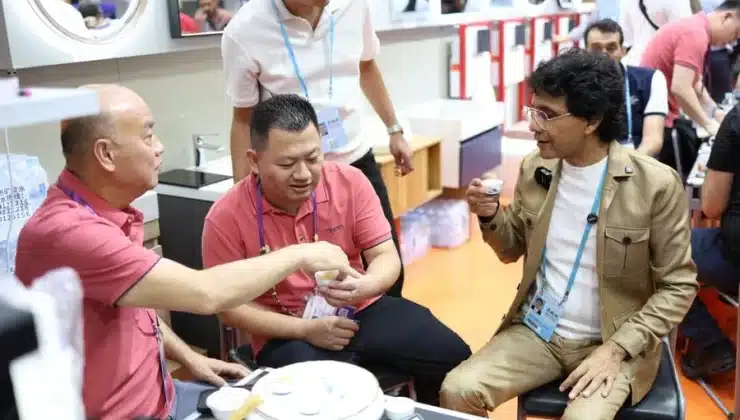
The Guangzhou Canton Fair has been running since 1957. That’s not a throwaway fact: it means the fair predates most of the multinational corporations that attend it today, predates the economic reforms that opened China to the world, and has survived political upheaval, economic crises, a global pandemic, and the wholesale transformation of Chinese manufacturing from low-cost assembly to an economy capable of producing some of the most sophisticated goods on the planet. Understanding how it got from there to here tells you something useful about what it is now and how to use it.
The fair that exists today looks nothing like the one that ran in its early decades. The scale is different. The exhibitor base is different. The relationship between buyer and seller that the fair facilitates is different. And the role it plays in global sourcing, while still significant, has changed in ways that affect how a serious buyer should approach it.
From State Enterprise to Global Marketplace
The Canton Fair’s origins were explicitly political and economic in a way its current form obscures. It launched in 1957 as a mechanism for China, largely isolated from Western trading systems at the time, to generate foreign exchange by selling goods abroad. The exhibitors were state enterprises. The buyers were largely from the Soviet bloc and a handful of developing countries. The range of products was limited. The event was essentially a controlled export mechanism rather than a free market.
The first major shift came with Deng Xiaoping’s economic reforms in the late 1970s and early 1980s. As China began opening to foreign investment and private enterprise, the fair’s exhibitor base started to diversify. Township and village enterprises, private manufacturers operating in the growing special economic zones, joint ventures with foreign partners: all of these began appearing at the fair as the reform era accelerated.
By the 1990s, the Guangzhou Canton Fair had become a genuine global sourcing destination. Western buyers arrived in significant numbers, drawn by Chinese manufacturing cost advantages that were, at the time, dramatic compared to domestic alternatives. The transactional character of the fair during this period was largely price-driven. Buyers came to find cheap goods. Exhibitors competed on cost. The relationship was fundamentally straightforward.
The Move to Pazhou and the Scale Question
For most of its history, the Canton Fair operated at the Liuhua complex in central Guangzhou, and the scale constraints of that venue shaped what the fair could be. The move to the Pazhou complex, completed in phases in the early 2000s, removed those constraints and produced an event whose physical dimensions changed the experience of attending it fundamentally.
The Guangzhou International Convention and Exhibition Centre at Pazhou remains the largest exhibition facility in the world by most measures. The Canton Fair fills it. That scale creates exhibitor diversity that’s genuinely without parallel in global trade shows, but it also creates navigation challenges and concentration of attention on certain product categories and halls that means some exhibitors effectively disappear into the noise.
The move to Pazhou coincided with significant upgrading of the fair’s digital infrastructure, including the online exhibitor database and pre-registration system that now allow buyers to do meaningful preparation before arriving. The fair as a purely physical discovery exercise gave way to a hybrid model where digital preparation increasingly determines what the physical visit can accomplish.
How Chinese Manufacturing Changed the Fair’s Character
The most significant evolution in the Guangzhou Canton Fair over the past two decades isn’t administrative or logistical. It’s the transformation of what Chinese manufacturers are capable of and consequently what they’re bringing to the fair.
The China of 2026 is not the China of 1995 or even 2005. Manufacturing capability has moved dramatically up the value chain. The low-cost, low-complexity assembly operations that defined the first wave of Western sourcing from China have either disappeared, moved to lower-cost locations within China or to other countries in Southeast Asia, or been replaced by more automated, higher-value production. What remains, and what shows up at the Guangzhou Canton Fair, increasingly reflects sophisticated manufacturing with real design capability, quality management systems that can meet demanding export market requirements, and in many cases genuine innovation in product development.
This shift matters for buyers in a direct way. The Canton Fair negotiation in 2026 is not the same negotiation as 1998. The cost advantage that once justified accepting lower quality, uncertain delivery times, and minimal supplier investment in the relationship has compressed. The suppliers worth working with are not the cheapest in the hall; they’re the ones with the capability and the commercial sophistication to be reliable partners over time. Finding them requires different criteria than finding the lowest price per unit.
The presence of significant Chinese domestic brands at the fair, companies that have built genuine brand equity in the Chinese market and are now seeking international expansion, is another dimension of this evolution. These are not traditional OEM suppliers; they’re potential partners or competitors depending on your market position. The Guangzhou Canton Fair has always been described as a place to find suppliers. It’s now also a place to find out what Chinese companies are building for themselves.
The Digital Layer and What It Changed
The Guangzhou Canton Fair’s investment in digital infrastructure has accelerated significantly, particularly since 2020. The pandemic forced a fully online version of the fair in 2020, and while the physical event returned, the digital tools developed during that period became permanent features of the hybrid model.
The implications for buyers are practical. The exhibitor database is searchable, filterable, and updated before each session. Product categories, company size, existing export markets, certification status: all of this is searchable before you book a flight. Buyers who arrive at the fair without having used the online platform are working with a significant handicap relative to those who’ve done the preparation.
Online appointment booking, introduced and refined over successive editions of the fair, means the most in-demand exhibitors are bookable in advance rather than available only on a first-come basis during the fair. For buyers targeting specific high-capability suppliers, this matters. The booths doing the most interesting work often have structured schedules. Showing up without an appointment and hoping to get the attention of the right person is an approach that increasingly doesn’t work.
The trade-off in the digital layer is that it advantages buyers who are well-organised and prepared while disadvantaging those who relied on physical discovery. The serendipitous meeting with a supplier you didn’t know to look for still happens, but it happens within a context where the better-prepared buyers have already secured meetings with the targets they identified in advance. The fair rewards preparation more than it used to.
What the Evolution Means for Sourcing Strategy
The Guangzhou Canton Fair in its current form requires a different approach from the one that worked twenty years ago. Several things that used to be reasonable strategies at the fair are now likely to produce poor outcomes.
Arriving without a prepared exhibitor list and walking the halls hoping to find the right supplier by coverage is inefficient in a way it wasn’t when the fair was smaller and the exhibitor base more homogeneous. The fair is too large for this to work well.
Using price as the primary selection criterion at the fair and assuming quality can be managed in the contract produces worse outcomes than it once did, partly because price differentials between suppliers at the fair have compressed as manufacturing costs have risen, and partly because the suppliers genuinely worth working with are competing on capability rather than on being the cheapest in the booth.
The assumption that a good Canton Fair session produces supplier relationships automatically, without structured follow-up, is one that fails at the same rate it always did, which is most of the time.
What does work is treating the Guangzhou Canton Fair as a qualification and relationship-initiation event within a broader sourcing process. The fair is where you identify suppliers who might be worth working with and do enough initial qualification to know whether a deeper conversation is warranted. The actual sourcing relationship, the factory audit, the sample development, the commercial negotiation, the quality management process: all of that happens after the fair, built on the foundation of what the fair made possible.
The Fair’s Continued Relevance
There’s a reasonable question about whether a twice-yearly physical trade show remains the best mechanism for global sourcing at a time when online marketplaces, digital sourcing platforms, and video communication make remote supplier identification and qualification more viable than ever.
The honest answer is that the Guangzhou Canton Fair remains uniquely valuable for specific purposes and less valuable for others. For identifying suppliers in product categories where physical sample inspection matters, for meeting the people behind the company profile rather than the profile itself, for understanding what’s happening at the leading edge of Chinese manufacturing across a wide range of categories simultaneously, and for doing initial qualification at a scale and density that no other event provides, it’s difficult to replace.
For routine reordering from established suppliers, for product categories where specification and quality can be reliably communicated and verified remotely, and for markets where Chinese manufacturers are well-represented on digital platforms, the fair matters less than it once did.
The buyers getting the most from the Guangzhou Canton Fair in 2026 understand this distinction. They use the fair for what it’s genuinely better at than the alternatives, and they use other tools for what those tools are better at. That calibration, more than any specific tactic at the fair itself, is what separates productive Canton Fair attendance from expensive tourism.