Can an App Find Skin Cancer? Here’s How AI Learns To Spot It
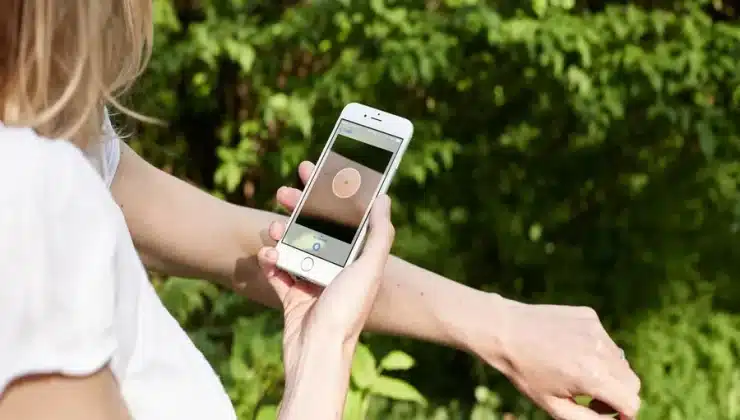
We trust our phones with a lot. They hold our banking details, our most awkward photos, and our late-night food delivery history. But could you trust an app to spot a suspicious mole? It’s a question that feels like it’s pulled straight from a science fiction movie, but the reality is already here with the rise of the AI skin cancer detection app.
These apps promise to give you an early warning about potentially cancerous skin lesions by simply taking a photo. While they are not a substitute for a professional dermatologist, they represent a fascinating intersection of healthcare and technology. But how do they actually work? How does a piece of software learn to distinguish a harmless freckle from a potentially life-threatening melanoma?
The answer lies in a complex process of training, involving massive datasets, meticulous labeling, and a constant battle against bias. This guide will walk you through how these remarkable apps are built, from the digital “textbooks” they study to the human expertise that guides them. Understanding the engine behind these tools is key to appreciating both their potential and their limitations.
The Foundation: It All Starts with Data
An AI model is a bit like a student. To become an expert in a subject, it needs to study a vast amount of information. For an AI skin cancer detection app, its “textbooks” are enormous collections of images known as datasets. These aren’t just a handful of pictures from a Google search; we’re talking about hundreds of thousands, or even millions, of high-quality dermatoscopic images.
These images come from various sources:
- Hospitals and dermatology clinics: Medical institutions are a primary source, providing a wealth of professionally captured images linked to confirmed diagnoses.
- Publicly available medical archives: Organizations like the International Skin Imaging Collaboration (ISIC) compile and share large, anonymized datasets specifically for research and development in this field.
- Research studies: Clinical trials and academic research projects often generate high-quality, well-documented image collections that can be used for training AI.
Simply having a mountain of images isn’t enough. The quality and diversity of this data are crucial. A good dataset needs to include a wide range of skin types, lesion types, and lighting conditions. Imagine an AI trained only on images of fair skin; it would likely perform poorly when analyzing a mole on darker skin. Therefore, creating a balanced and representative dataset is the first and most critical step in building a reliable AI.
From Picture to Diagnosis: The Art of Labeling
Once a dataset is assembled, the AI needs a way to understand what it’s seeing. This is where labeling comes in. Each image in the dataset must be annotated by a human expert—typically a board-certified dermatologist—who identifies the lesion and provides a definitive diagnosis.
Think of it as giving the AI an answer key. The dermatologist looks at an image of a mole and labels it as “benign nevus,” “melanoma,” “basal cell carcinoma,” and so on. This process is painstaking and requires a high degree of accuracy. If the labels are wrong, the AI learns the wrong information, much like a student studying from a textbook full of errors.
The labels can be simple classifications, but more advanced models use a technique called segmentation. In this process, the dermatologist carefully outlines the exact border of the lesion in the image. This teaches the AI not only what the lesion is but also its precise shape and boundaries, helping it analyze features like border irregularity—a key characteristic of many skin cancers.
This expert-driven labeling process is what transforms a simple collection of photos into a powerful training tool. It’s a perfect example of human intelligence guiding artificial intelligence.
AI technology is reshaping healthcare with faster diagnosis and smart monitoring tools, and Techsslaash highlights how artificial intelligence supports doctors and improves patient care efficiency.
The Training Process: How an AI Learns to “See”
With a massive, expertly labeled dataset ready, the actual training can begin. The AI model, often a type of neural network called a Convolutional Neural Network (CNN), starts to process the images. CNNs are specifically designed for image recognition tasks. They work by breaking down an image into its fundamental components—pixels, edges, textures, and shapes.
The training process works like this:
- Feeding the Data: The model is shown an image from the dataset.
- Making a Prediction: Based on its current understanding, it makes a guess about the diagnosis (e.g., “I think this is a benign mole”).
- Checking the Answer: The model then compares its prediction to the expert label provided by the dermatologist.
- Learning from Mistakes: If the guess was wrong, the model adjusts its internal parameters to correct its mistake. For instance, if it misidentified a melanoma as a benign mole, it will learn to pay closer attention to the features that characterize melanoma, such as asymmetry or varied coloration.
This cycle is repeated millions of times with different images. With each iteration, the AI becomes progressively better at recognizing the subtle patterns and features that distinguish cancerous lesions from benign ones. It learns to “see” like a dermatologist, identifying tell-tale signs that might be invisible to the untrained human eye.
The Unseen Challenge: Fighting Algorithmic Bias
One of the most significant challenges in developing an AI skin cancer detection app is algorithmic bias. An AI is only as good as the data it’s trained on. If the training dataset lacks diversity, the resulting model will be biased.
The most prominent example of this is skin tone bias. Historically, medical datasets have overwhelmingly featured images from individuals with lighter skin tones. An AI trained on such a dataset may be highly accurate for fair-skinned users but perform poorly and unreliably for individuals with brown or black skin. This is not just a technical flaw; it’s a critical equity issue that can lead to missed diagnoses and worsen health disparities.
To combat this, developers must actively work to create more inclusive datasets. This involves:
- Proactively collecting images from diverse patient populations around the world.
- Using statistical techniques to ensure the dataset is balanced across different skin types, ages, and genders.
- Partnering with dermatologists who serve diverse communities to gather representative data.
Addressing bias is an ongoing effort. It requires a conscious commitment to fairness and equity from the very beginning of the development process to ensure the technology benefits everyone, not just a select few.
What’s Next for AI in Dermatology?
The journey of training an AI skin cancer detection app is a testament to the power of combining human expertise with machine learning. While these apps are not meant to replace your doctor, they are a powerful tool for promoting skin health awareness and encouraging early detection. By understanding how they are built—from the massive datasets to the fight against bias—we can better appreciate their role in the future of healthcare. You can also explore the cookout menu with prices for additional related insights and context.
The technology is constantly improving. As datasets grow larger and more diverse, and as algorithms become more sophisticated, the accuracy and reliability of these apps will only increase. If you’re curious about your skin health, these tools can be a great first step, but always remember to follow up with a qualified medical professional for a definitive diagnosis.
Ready to explore how AI can help you stay on top of your skin health? A consultation with a dermatologist is the gold standard, and these emerging technologies can empower you to take a more active role in monitoring your skin between visits.